What is fuzzing?
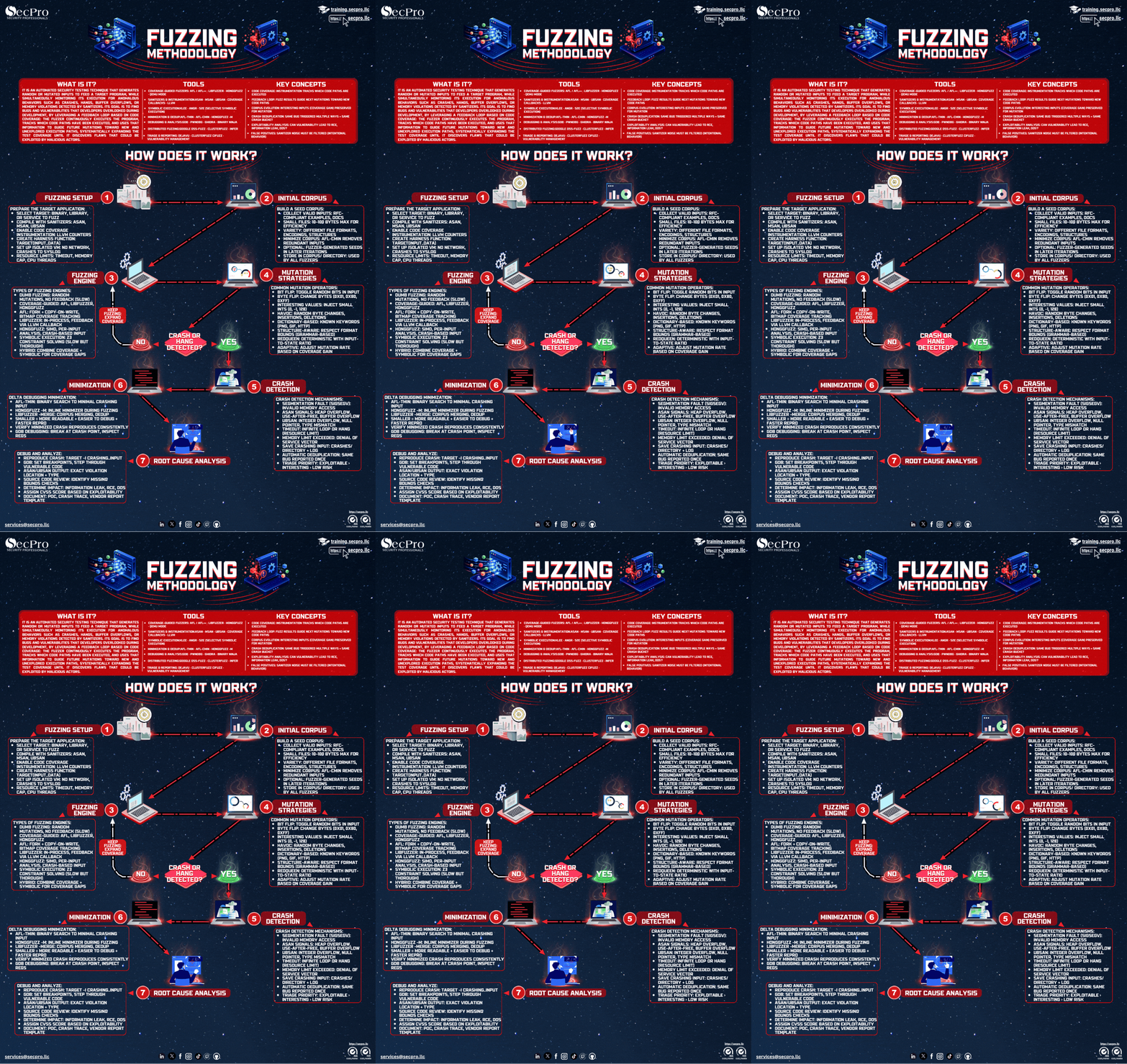
Fuzzing means bombarding a program with malformed, unexpected or random input and watching whether it breaks. The idea is simple, which is why it works: developers test what they expect to receive, and security flaws live precisely in what they did not expect. Every crash, hang or invalid memory access is a clue to a possible overflow, corruption or denial of service.
Blind, guided and grammar-based
Blind fuzzing generates random input: cheap and inefficient. Coverage-guided fuzzing instruments the binary to know which code paths each input reaches and mutates those exploring new territory, which is what made it genuinely effective. Grammar-based fuzzing builds input respecting the format's structure — a valid PDF, a correct HTTP request — to get past the first validity checks.
How it fits into development
The best return comes from running it continuously rather than in one-off campaigns: in continuous integration against components that process external input — parsers, deserializers, decoders — with a seed corpus that grows with every interesting case. It pays to combine it with memory error detectors, because without them many corruptions cause no visible crash and go unnoticed.