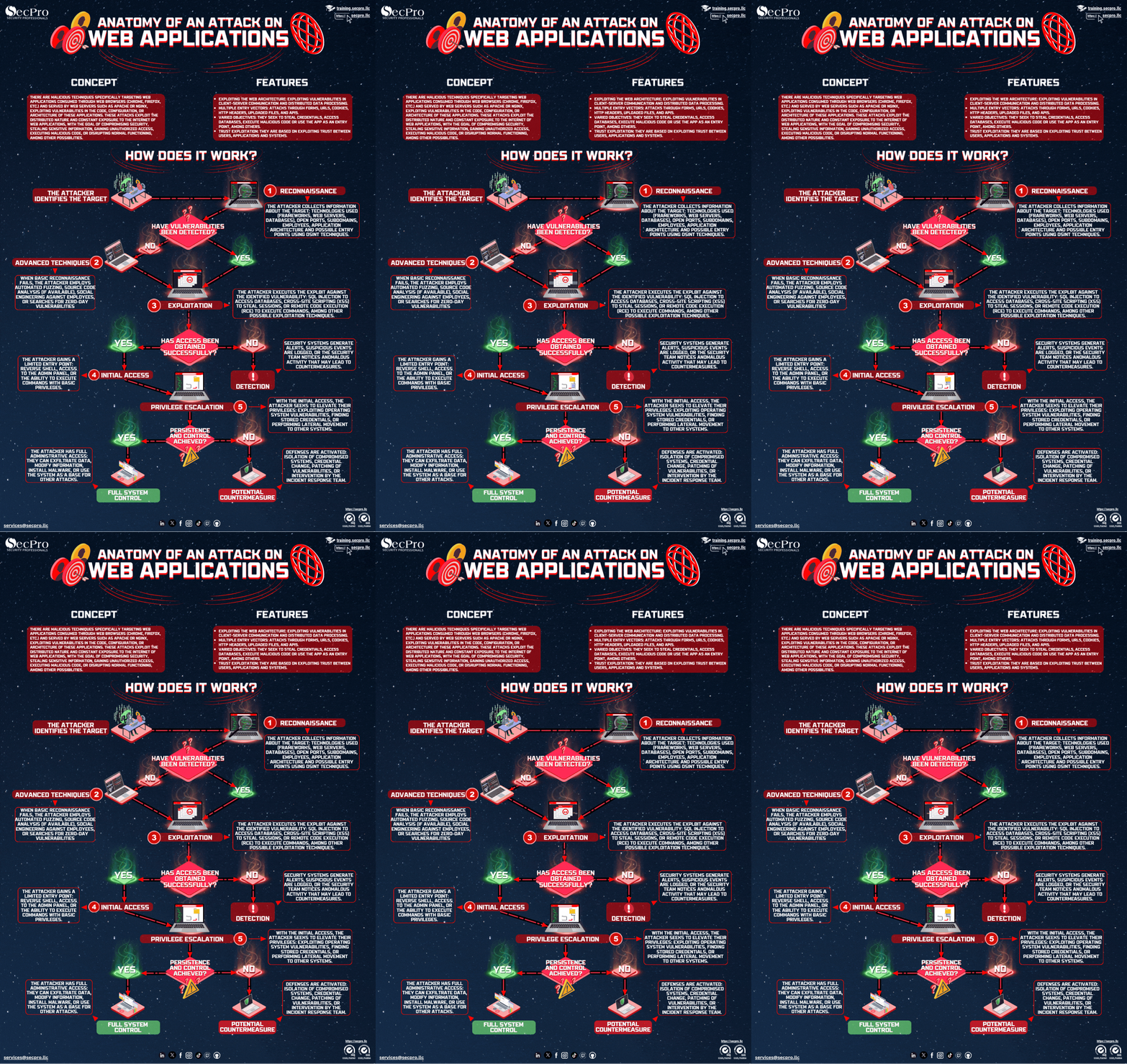
Where do attacks against a web application come in?
Almost always the same place: wherever the application trusts data coming from the user. The dominant families are injection (SQL, commands, templates), cross-site scripting, broken access control — asking for someone else's resource and having the server hand it over — server-side request forgery, and misconfiguration. The OWASP Top 10 ranks them by prevalence and impact.
Broken access control is number one
It is not the flashiest flaw, but it is the most widespread: the application checks the user is logged in and assumes they may therefore see whatever they ask for. Changing an identifier in the URL, a role in a request, or going straight to an admin path without passing through the menu still works in a surprising number of applications, and scanners miss it because the response is a perfectly normal 200.
How are these risks reduced?
Always validate and encode server-side, never only in the browser; use parameterized queries instead of concatenating strings; centralize authorization in a shared layer and check it against the session identity; keep dependencies current, since they are the origin of a good share of breaches; and add headers like CSP, which do not fix a flaw but sharply limit what an attacker can do with one.