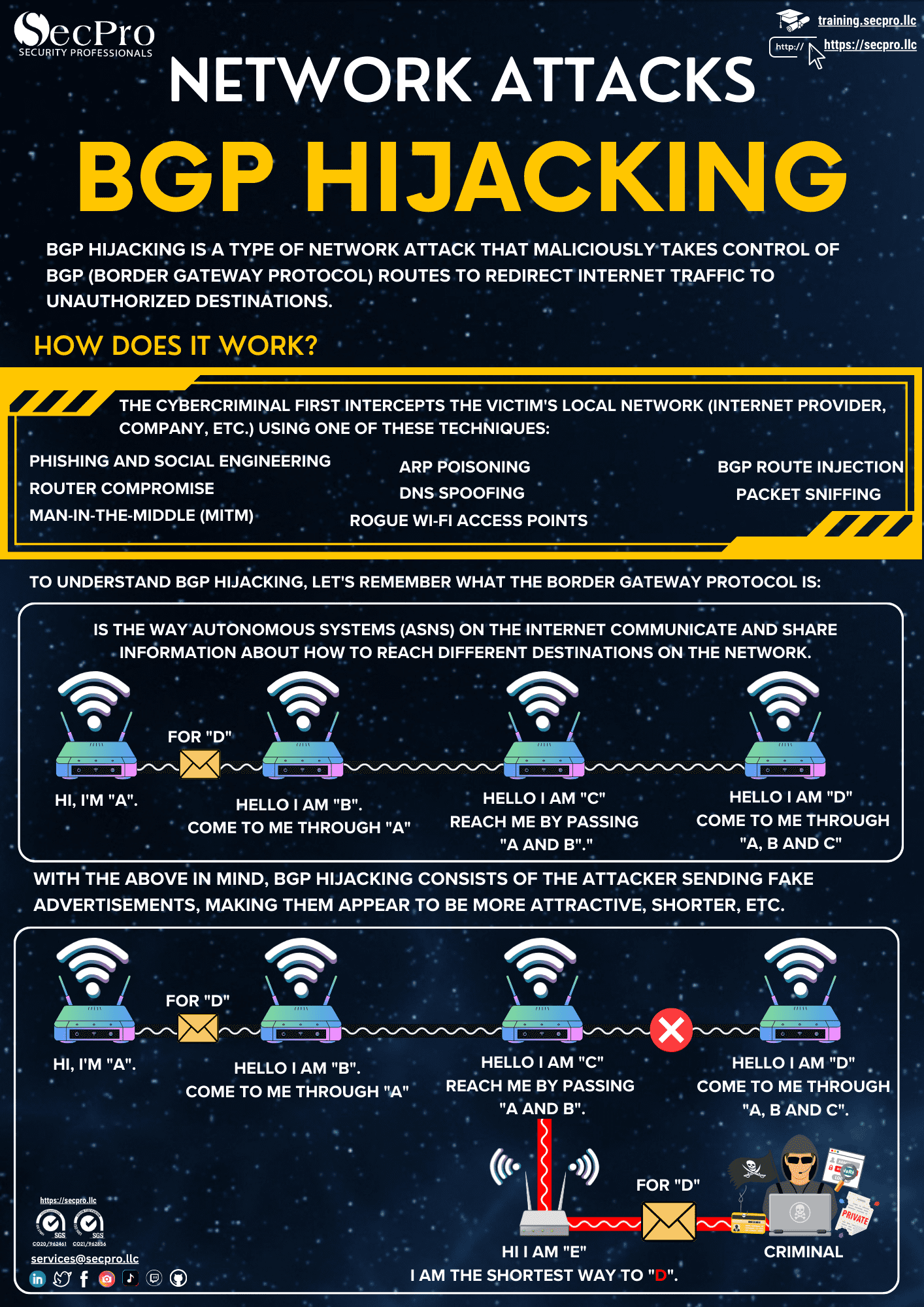
What is BGP hijacking?
BGP is the protocol with which internet networks announce to each other which IP addresses they can reach. It was designed on mutual trust: if a network announces it can reach a block of addresses, the others believe it. Hijacking means announcing someone else's ranges to attract their traffic, and the more specific route wins, so an announcement more precise than the legitimate one diverts communications to the attacker.
What can someone who hijacks a route do?
Anything from dropping the traffic — an outage for the affected service — to intercepting it and forwarding it to the real destination so nobody notices while it is copied along the way. It has been used to steal cryptocurrency by redirecting wallet services and to obtain fraudulent TLS certificates, because domain validation at many authorities works by proving control of an IP: divert the IP and you pass the check.
How does a network defend itself?
With RPKI, which cryptographically signs which network may announce each block and lets others reject invalid announcements; by publishing correct route objects and filtering customer announcements; and by watching your own prefixes with monitoring services that alert when someone else announces them. On the user side, end-to-end encryption with pinned certificates limits the damage of an interception.