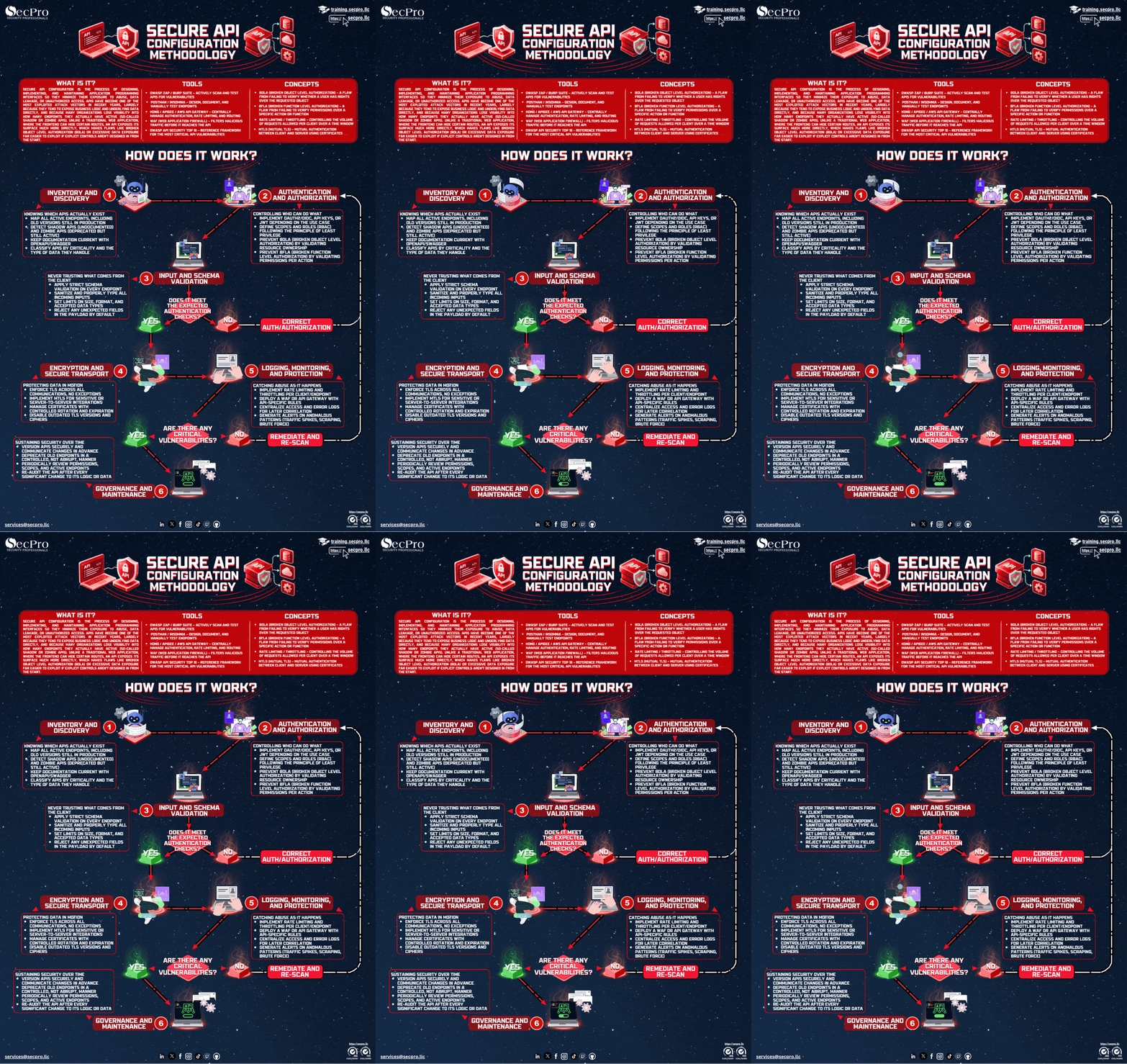
What is OSINT for in a Red Team operation?
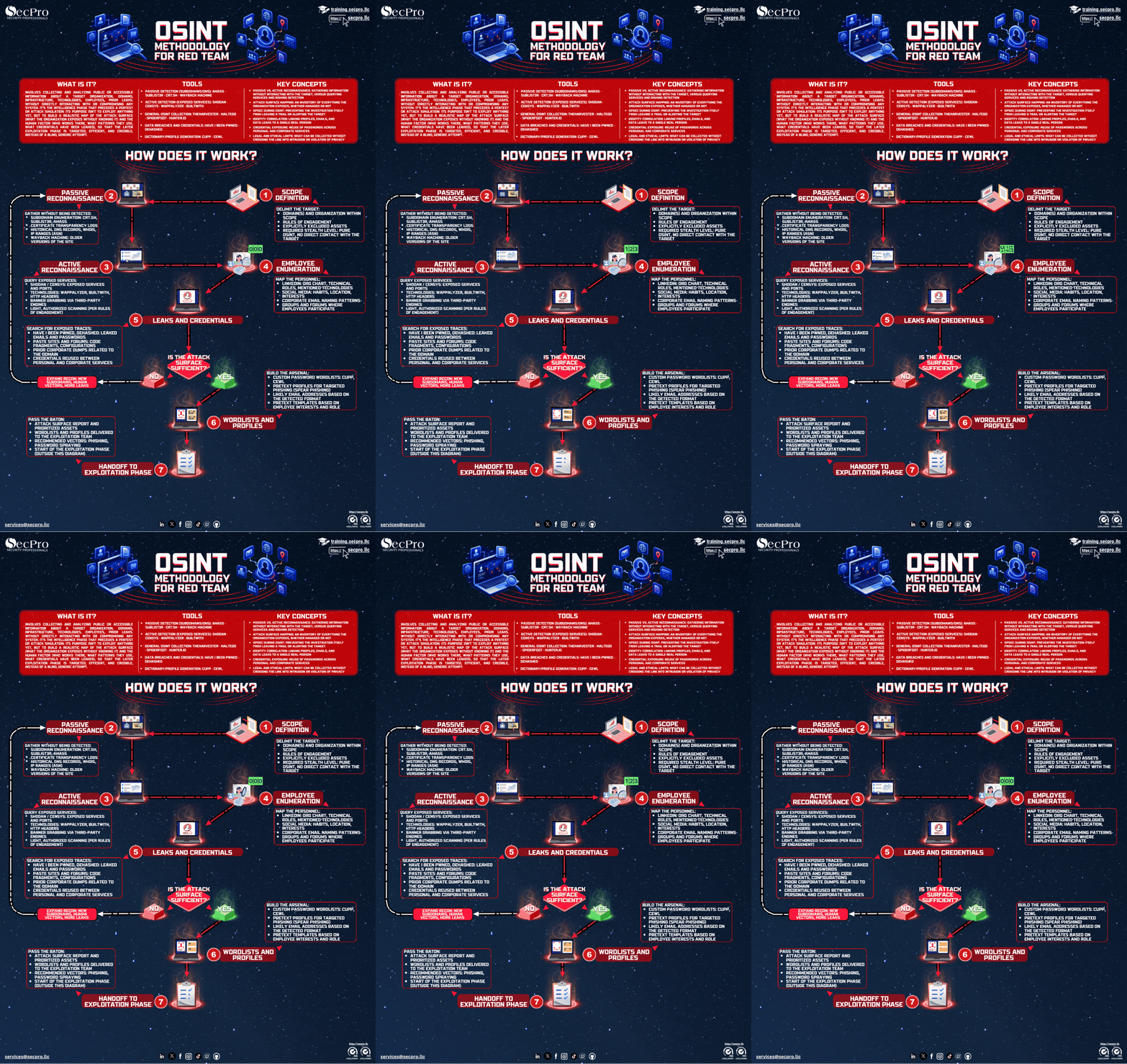
In a Red Team exercise, open-source intelligence is the phase that shapes everything else. Before sending a single packet at the client's infrastructure, you reconstruct their exposed surface: domains and subdomains, IP ranges, technologies, providers, employees and their roles. All from public information, without touching the target's systems, which makes it undetectable and the most cost-effective moment of the engagement.
Phases of the methodology
The work runs in four beats. First, define requirements: what you are looking for and why, because collecting without a question produces noise. Second, collection: infrastructure (DNS, certificates, ranges, metadata) and people (professional profiles, email addresses, prior credential leaks). Third, analysis: correlate and discard what is stale, which is where most teams fail. Fourth, turn it into concrete initial-access vectors ranked by likelihood.
From information to entry vector
The value is not in the volume collected but in what it enables. A forgotten subdomain pointing at a decommissioned service is a subdomain takeover; an email pattern inferred from LinkedIn lets you build the target list for a spear-phishing campaign; a public document with metadata reveals usernames and software versions. An OSINT report that does not end in actionable vectors is a list, not intelligence.