What is a trojan?
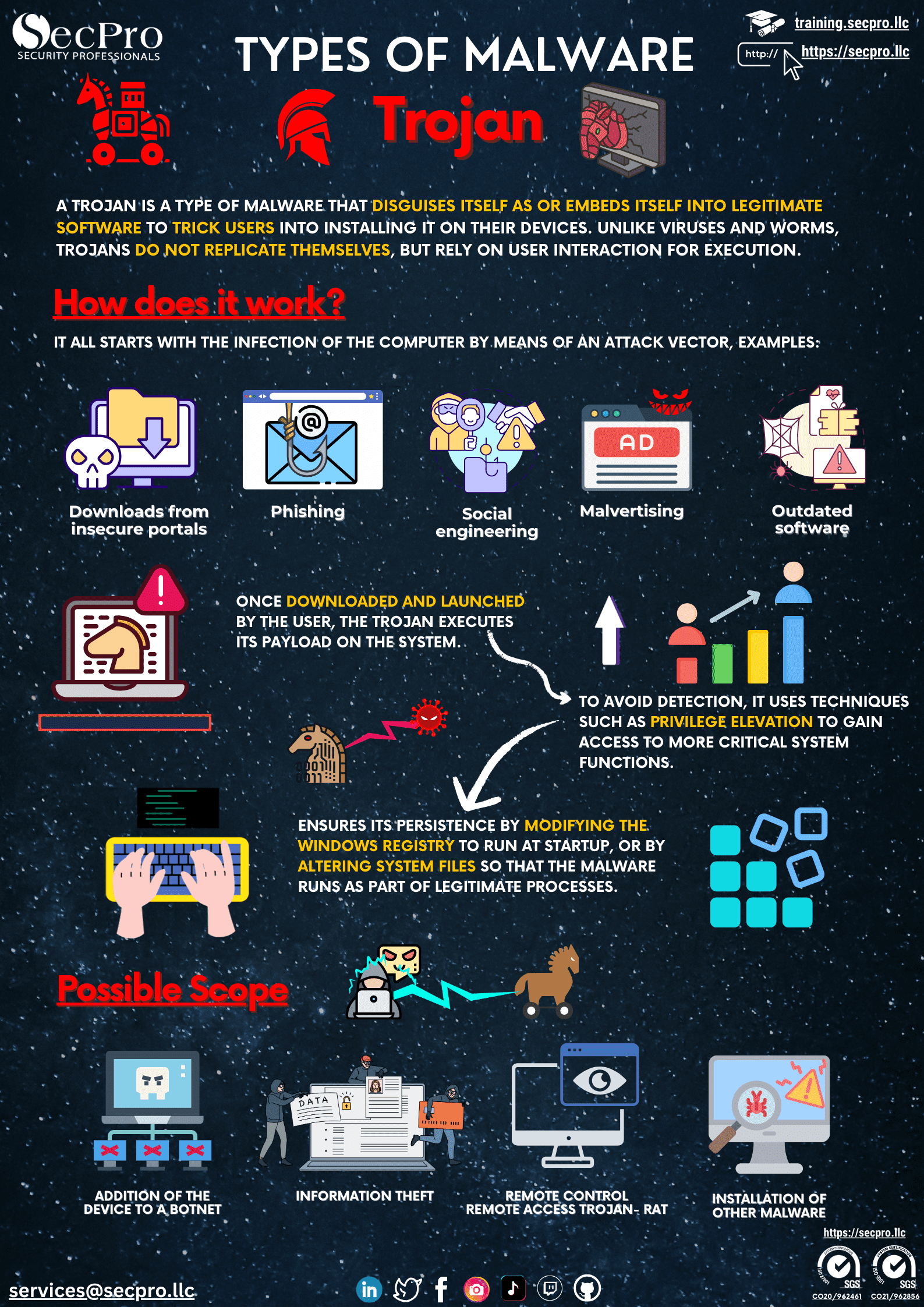
It is malicious software presented as something legitimate and useful so the victim installs it willingly. Unlike viruses and worms it does not replicate: its entire success depends on the initial deception. Once inside, it runs its intended function in the background.
Types of trojan by objective
Remote access trojans (RATs) grant full control of the machine; banking trojans intercept credentials and financial operations; infostealers extract saved passwords, cookies and wallets; downloaders exist only to install other malware afterwards; and backdoors guarantee the attacker's return even if the original entry path is closed.
Entry paths and prevention
They arrive as attachments, pirated software, fake updates, apps from outside official stores, and malicious search engine ads. Prevention means installing only from official sources, verifying digital signatures, restricting administrator privileges, and watching for unexpected outbound connections from the machine.
Learn more